

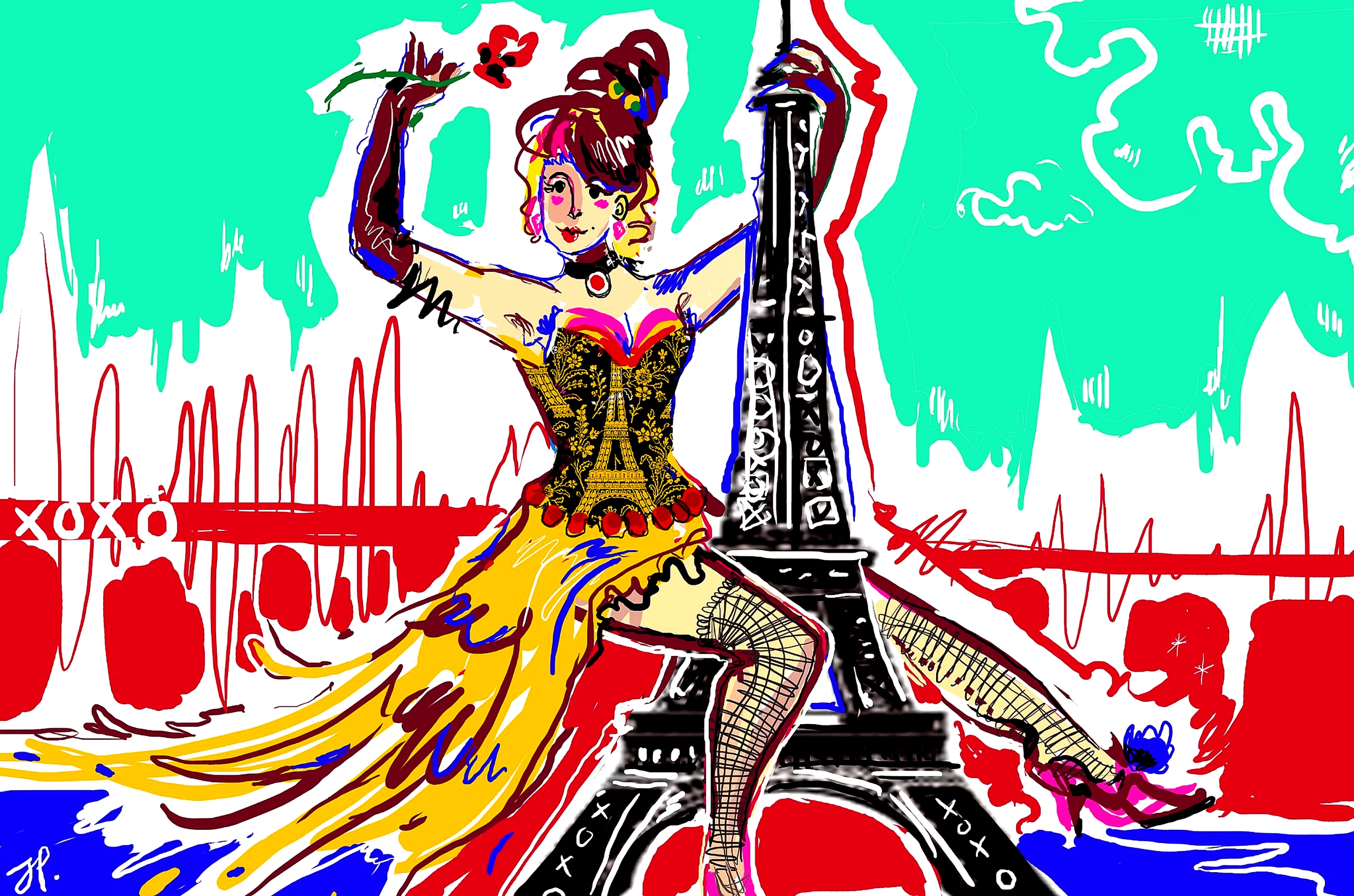
Woman Who Married Eiffel Tower and Fell in Love With Fence
Page Contents
The Woman Who Married the Eiffel Tower — And Why She Later Fell in Love With a Fence
In 2007, a woman stood before one of the world’s most iconic structures and made a decision that would shock millions.
She didn’t just admire the Eiffel Tower.
She married it.
Her name is Erika Eiffel, and her story forced the world to confront an uncomfortable truth: love, for some people, does not follow society’s rules.
Years later, she would form emotional attachments to other objects — including a fence — raising deeper questions about human psychology, emotional safety, and the evolving nature of relationships.
This type of relationship has a name.
It is called Objectum Sexuality.
What Is Objectum Sexuality?
Objectum Sexuality is a rare emotional and romantic orientation in which a person develops deep attachment to inanimate objects.
These are not casual preferences or symbolic gestures.
The emotional connection experienced by individuals with Objectum Sexuality can be as intense and meaningful as traditional human relationships.
People with this orientation may form bonds with:
-
Buildings
-
Bridges
-
Towers
-
Machines
-
Structures
-
Or even everyday objects like fences
For them, the object represents more than physical material.
It represents emotional presence.
Stability.
Connection.
And comfort.
Erika Eiffel’s Marriage to the Eiffel Tower
Erika Eiffel held a commitment ceremony in 2007 and later changed her surname to reflect her emotional bond with the Eiffel Tower.
She described the tower as emotionally supportive, stable, and consistent.
Unlike human partners, the tower never rejected her.
It never betrayed her.
It never emotionally withdrew.
It remained constant.
For Erika, that constancy created a form of emotional safety she found difficult to experience in human relationships.
Her attachment was not about fantasy.
It was about emotional security.
Why Emotional Attachment to Objects Happens
Human beings are wired for connection.
But connection does not always form through traditional pathways.
Psychologists suggest that Objectum Sexuality may be linked to how some individuals experience emotional safety and predictability.
Objects offer something humans cannot guarantee:
Permanence.
Objects do not leave.
They do not judge.
They do not abandon.
For individuals who value emotional stability deeply, objects can represent a form of psychological peace.
This does not make the emotions less real.
It simply makes their direction different.
The Fence That Later Became Emotionally Significant
Years after her marriage to the Eiffel Tower, Erika formed emotional attachments to other objects, including fences.
This shocked many observers.
Not because emotional attachment itself is unusual, but because society rarely accepts objects as legitimate emotional partners.
Her experience challenged society’s assumptions about what love should look like.
It forced people to confront a deeper question:
Is love defined by social approval — or by emotional experience?
For Erika, the attachment was not symbolic.
It was an emotional reality.
What This Reveals About the Nature of Love
Erika Eiffel’s story is not just about one woman and a tower.
It is about the psychology of emotional safety.
It is about the human need for stability.
And it is about how emotional attachment evolves in ways society does not always expect.
Modern relationships are already changing.
People now form emotional bonds with:
-
Digital identities
-
Virtual personalities
-
Artificial intelligence
-
Online relationships
Objectum Sexuality exists on the far edge of that emotional spectrum.
It reveals how powerful the human need for connection truly is.
Why Stories Like This Trigger Strong Reactions
Stories like Erika’s challenge deeply rooted beliefs.
Society has long defined love as something that exists only between humans.
But her experience exposes a more complex truth.
Love, at its core, is psychological.
It is emotional.
It is deeply personal.
And it does not always conform to social expectations.
Some people see her story as unusual.
Others see it as a reflection of emotional diversity.
What cannot be denied is that her story forces society to rethink its assumptions.
Because in the end, love is not defined by what society understands.
It is defined by what the individual experiences.
For more bold explorations into human intimacy, psychology, and evolving modern relationships, visit our homepage at Erotic Africa.
 1865
1865 FR
FR