
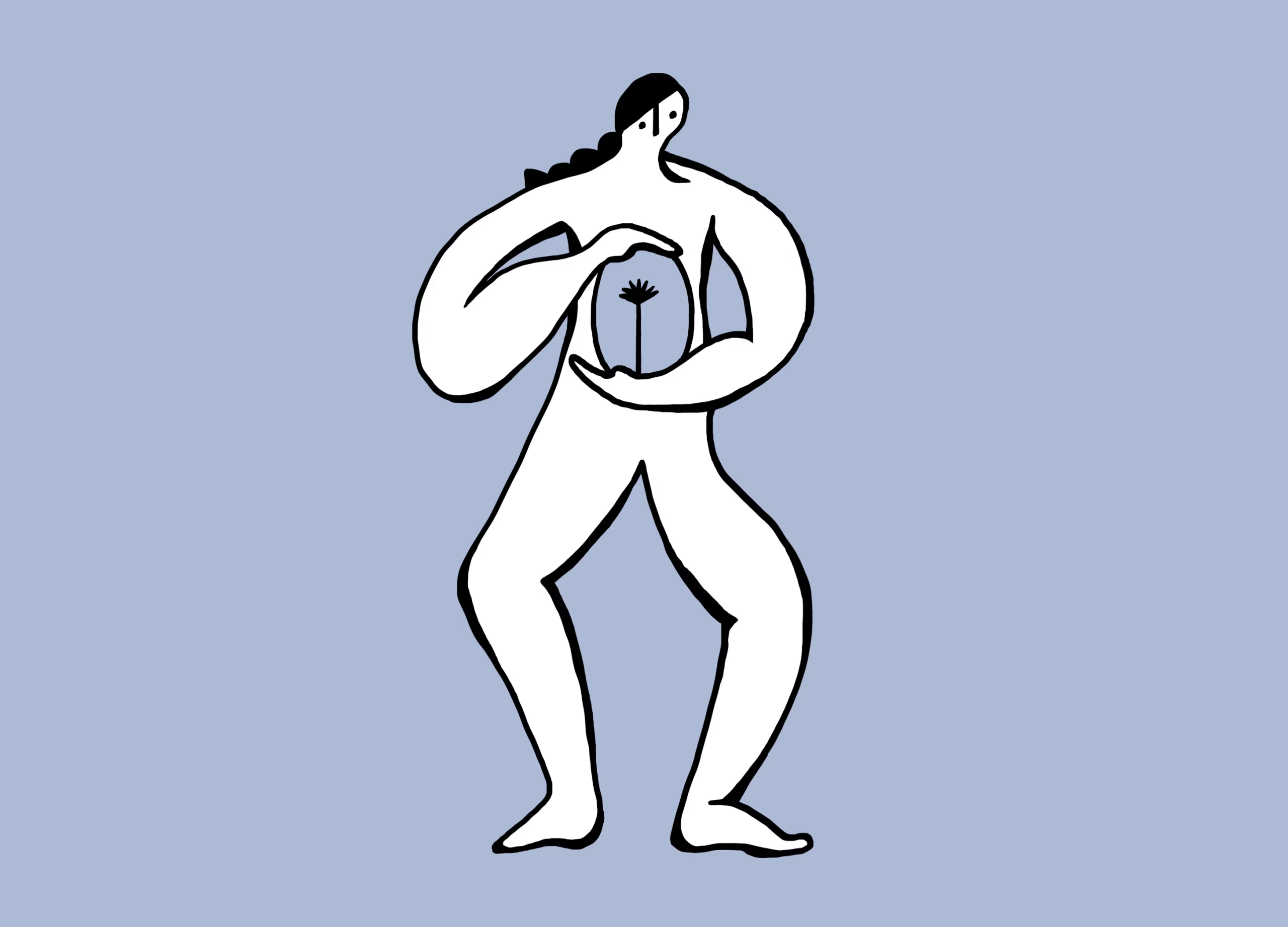
Erotic Plasticity in Women: Why You Lose Attraction Fast
Page Contents
Erotic Plasticity: Why the “Pre-Sex Context” Is the Secret to Your Ladyboner
Have you ever been deeply attracted to someone…
only for that attraction to disappear the moment they said something rude to a waiter—or ignored a clear boundary?
That’s not you being “fickle.”
That’s erotic plasticity in action.
And it says a lot about how your environment, emotions, and mental state shape your desire.
Desire Isn’t Just Physical—It’s Contextual
Let’s clear something up:
Your desire isn’t random.
And it’s definitely not as simple as people make it seem.
If you’ve ever gone from “don’t touch me” to “okay… maybe” depending on the mood, the vibe, or even a conversation—you’re not inconsistent.
You’re responsive.
In psychology, erotic plasticity describes how much your sexual desire can be shaped by external factors—your environment, emotional state, and social context.
In other words:
Your “ladyboner” doesn’t just respond to a person.
It responds to everything happening around that moment.
What Exactly Is Erotic Plasticity?
Coined by social psychologist Roy Baumeister, the theory suggests that female sexuality tends to be more fluid and influenced by context than male sexuality.
While a stereotypical “manboner” may be triggered by direct visual or physical cues, a “ladyboner” is often tied to something deeper:
The narrative. The energy. The experience.
Which means attraction isn’t just about who you’re with.
It’s about how it feels to be with them.
The Components of Your “Context”
Before anything physical even happens, your brain is already assessing the situation.
Here’s what shapes your desire:
The Emotional Lead-Up
Was there a connection? A meaningful conversation?
Or unresolved tension lingering in the background?
The Power Dynamic
Do you feel respected, desired, and safe—or dismissed, rushed, or overlooked?
The Environment
Is the space clean, private, and comfortable?
Or are you mentally staring at a pile of laundry or a buzzing phone?
Your Internal State
Stress, fatigue, hormones, insecurity—your body keeps score, even when you try to ignore it.
Desire doesn’t exist in isolation.
It builds—or collapses—based on context.
The “Brakes” and “Accelerators” of Desire
To understand how context affects arousal, we need to look at the Dual Control Model, popularized by Dr. Emily Nagoski.
Your brain operates on two systems:
The Accelerator (Excitement)
Everything that turns you on—touch, chemistry, flirtation, anticipation.
The Brakes (Inhibition)
Everything that turns you off—stress, discomfort, fear, distraction.
Here’s where erotic plasticity becomes powerful:
Your “brakes” are highly sensitive to context.
You can have the most attractive partner in the world, but if the emotional or mental environment feels off, your brain will shut things down before your body even gets a chance to respond.
How Pre-Sex Context Shapes Your Desire
1. Mental Foreplay Starts Early
For many women, foreplay doesn’t start in the bedroom.
It starts hours earlier:
- A thoughtful message during the day
- A shared joke that lingers
- Feeling seen, heard, and understood
That slow build isn’t optional—it’s foundational.
Without it, intimacy can feel like jumping to the end of a story you weren’t fully in.
2. The “Ick” Factor Is Instant
Because desire is plastic—moldable—it can also lose its shape just as quickly.
A single moment can shift everything:
- A condescending comment
- Lack of care or hygiene
- Feeling emotionally unseen
And just like that:
From “yes” → to “absolutely not.”
3. Culture Shapes What You Find Sexy
Erotic plasticity doesn’t just exist in the moment—it’s shaped over time.
What you’ve been exposed to matters:
- The media you consume
- The conversations you engage in
- The ideas you internalize about attraction and intimacy
Your desire is influenced by the world around you—whether you realize it or not.
Why This Gets Misunderstood in Relationships
This is where friction often shows up.
Someone might think:
“If you’re attracted to me, why aren’t you always in the mood?”
But here’s the truth:
Attraction is stable.
Desire is responsive.
Without understanding erotic plasticity, your partner may misinterpret:
- Your hesitation as rejection
- Your timing as inconsistency
- Your needs are “complicated.”
When really, you just need the right conditions.
How to Work With Your Desire (Not Against It)
Instead of asking, “What’s wrong with me?”
Ask: “What does my body respond to?”
Start paying attention:
Audit your environment
Is your space calming—or distracting?
Communicate the lead-up
Sometimes desire starts with emotional connection, not physical touch.
Reduce the brakes
Identify what’s blocking you—stress, noise, discomfort—and remove it where you can.
Sometimes it’s simple:
- Closing your laptop
- Dimming the lights
- Slowing the pace of the moment
You can’t force desire—but you can create the conditions for it.
Your Desire Isn’t Broken—It’s Sophisticated
If your drive feels inconsistent, it’s not dysfunction.
It’s sensitivity.
Erotic plasticity means your sexuality is connected to:
- Your mind
- Your emotions
- Your environment
- Your lived experiences
When do those align?
Desire doesn’t just appear.
It builds. It deepens. It lingers.
It’s Not About Being “Hard to Turn On”
It’s about being tuned in.
You’re not a switch.
You’re a system.
And once you understand how your context shapes your desire, everything changes.
You stop forcing moments that don’t feel right.
You stop questioning yourself.
You start creating experiences that actually work for you.
If you’re exploring deeper conversations around desire, identity, and modern intimacy, you’ll find more at Erotic Africa.
 1034
1034 FR
FR