

Mexico to Distribute 7 Million Condoms During 2026 World Cup
Contenu des pages
Scoring Safely: Why Mexico Is Handing Out 7 Million Condoms for the 2026 World Cup
The FIFA World Cup is finally here, and while the world’s eyes are glued to the pitch to see who scores the most goals, health officials in Mexico are focusing on a completely different kind of “scoring.”
As millions of football fans pour into North America for the 2026 World Cup, Mexico is preparing one of the boldest public health campaigns linked to a major sporting event. The plan? Distributing between 6 and 7 million free condoms during the tournament.
If you thought all the action was only happening inside the stadiums, think again.
Mexico is turning the World Cup into more than a football festival. It is using the global spotlight to promote sexual health awareness, safer celebrations, and responsible choices among fans, tourists, and local communities.
For fans who want to follow the tournament beyond this story, we will also be sharing quick match reactions, football buzz, and major World Cup updates on our Telegram page.
The Game Plan: Why Mexico Is Distributing Condoms
Hosting a mega-event like the World Cup brings an electric atmosphere. Stadiums fill up, streets come alive, fan zones overflow, and nightlife gets busier than usual.
But with that excitement also comes a massive influx of international and domestic tourists. Big global events often increase social interaction, parties, travel, romance, and casual encounters. Mexico’s health officials are not ignoring that reality.
Instead, they are tackling it directly.
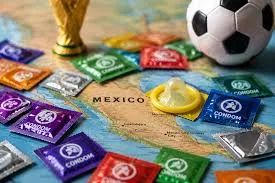
The condom distribution campaign is designed to reduce the spread of sexually transmitted infections such as HIV, syphilis, and gonorrhea. It also aims to encourage safer choices among fans who are celebrating, partying, and meeting new people during the tournament.
In simple terms, Mexico is saying: enjoy the football, enjoy the celebrations, but protect yourself.
Where Will the Condoms Be Distributed?
Mexico’s campaign is expected to focus heavily on the country’s three major World Cup host cities:
- Mexico City
- Guadalajara
- Monterrey
These cities will host thousands of visiting fans, packed viewing areas, tourist activity, and major nightlife movement throughout the tournament.
Rather than keeping the initiative confined to clinics or hospitals, health authorities are expected to bring the campaign closer to where fans are. Distribution points may include airports, transit hubs, fan zones, public viewing areas, tourist districts, bars, restaurants, and other high-traffic areas linked to the World Cup.
This makes the campaign practical. Fans do not have to go looking for protection or information. The message meets them where the energy is.
“A Condom Without Information Is Like Candy in Your Pocket”
One of the strongest parts of Mexico’s campaign is that it is not just about handing out condoms.
Health officials are also focusing on education.
The millions of free condoms are expected to be distributed alongside educational materials, including bilingual information for both local and international visitors. The goal is to explain how to prevent sexually transmitted infections, why protection matters, and why sexual health should not be treated as a taboo topic.
That is important because access alone is not enough. People also need clear information.
As one public health message around the campaign suggests, a condom without proper awareness is not enough. The real goal is to help people understand prevention, make responsible decisions, and feel comfortable discussing sexual health without shame.
Why This World Cup Campaign Stands Out
Condom distribution at major sporting events is not new.
The Olympic Games, for example, have a long history of giving out condoms to athletes in the Olympic Village. But the World Cup is different.
Football teams do not stay together in one centralized village. They are spread across different hotels, cities, and countries. That means Mexico’s campaign is not mainly aimed at players.
It is aimed at fans.
That is what makes this story more interesting. Mexico is not just preparing for football matches. It is preparing for the wider social impact of the tournament: tourism, parties, nightlife, fan gatherings, and the movement of millions of people across host cities.
A Tale of Three Co-Hosts
The 2026 World Cup is unique because it is being hosted by three countries: Mexico, the United States, and Canada.
All three countries will welcome fans, but their public health approaches appear different.
Mexico is taking the boldest approach with a nationwide campaign and millions of condoms being distributed across its host cities. Canada has also seen city-level initiatives, including playful soccer-themed condom awareness campaigns. The United States, however, has not announced a major unified condom distribution campaign linked to the tournament.
This gives Mexico’s campaign a distinct identity. While some countries are focusing mainly on logistics, stadiums, and tourism, Mexico is adding sexual health to the World Cup conversation.
Fans React: Smart Move or Too Much?
As expected, the campaign has sparked plenty of reactions online.
Some fans see it as funny. Others see it as bold. Some may even feel it is too much for a football tournament.
But from a public health point of view, the logic is clear. When millions of people gather for a global event, health planning must go beyond emergency services and crowd control. It must also include prevention.
The campaign does not encourage reckless behavior. Instead, it recognizes that people will celebrate, socialize, and make personal choices. Mexico’s role is to make sure those choices can be safer and better informed.
More Than Football: A Public Health Legacy
The World Cup is always remembered for goals, rivalries, heartbreaks, and celebrations. But host countries also leave behind bigger lessons.
For Mexico, this campaign could become part of its World Cup legacy.
By distributing millions of condoms and opening up conversations around sexual health, the country is showing that being a good host means protecting fans beyond the final whistle. It means thinking about what happens in the streets, hotels, parties, and fan zones after the match ends.
It is a bold reminder that football brings people together in more ways than one.
For more African entertainment stories, viral conversations, football buzz, and lifestyle updates, keep following Afrique érotique as we track the moments everyone is talking about.
Final Whistle
Mexico’s plan to distribute up to 7 million condoms during the 2026 World Cup is one of the most talked-about side stories of the tournament.
It is catchy enough to trend, but serious enough to matter.
While fans focus on goals, flags, and national pride, Mexico is reminding everyone that health and safety are also part of the game plan.
So whether you are cheering for El Tri, following your favorite African team, or just enjoying the global football fever, the message from Mexico is clear:
Celebrate hard, enjoy the beautiful game, and make sure you score safely.
For real-time reactions, fan talk, and World Cup updates throughout the tournament, join our Telegram page and stay locked in.
What do you think of Mexico’s massive World Cup condom campaign? Smart public health move or too much for football? Let us know in the comments.
 49
49 EN
EN